Who Isabella Of Mar Was
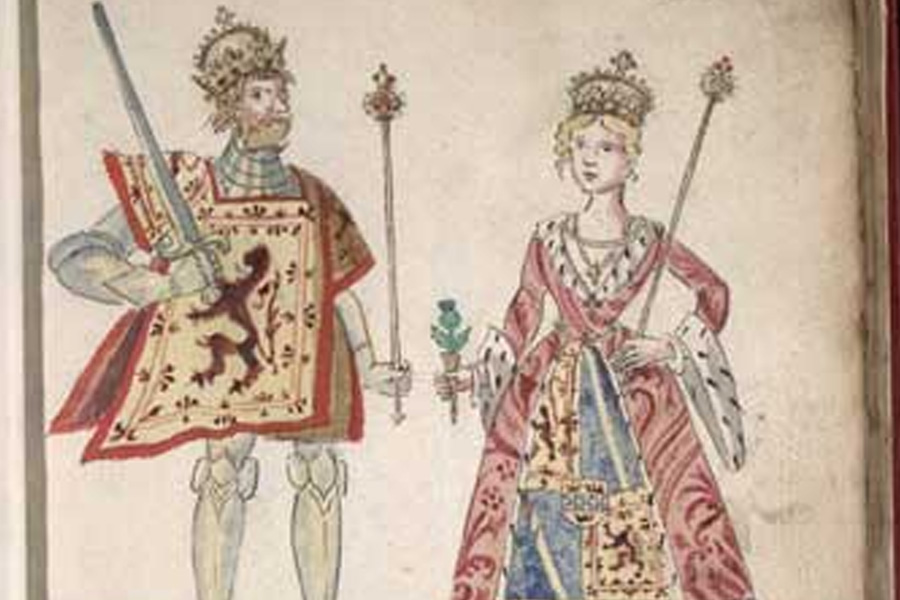
I picture Isabella Of Mar like a bright star glimpsed only briefly before dawn. She lived in the late 13th century, a Scottish noblewoman whose life was short but whose lineage changed the course of kingdoms. She became the first wife of Robert Bruce, who would later be crowned Robert I, King of Scots. Isabella died before he took the throne, so she never wore a crown herself, yet we still feel the ripples of her story in the family lines that unfolded after her.
I have always found her presence a striking reminder that history is not only forged on battlefields. It is also carried forward in marriages, kinship bonds, and children who grow into their own storms and sunlight.
Early Life and Lineage
Isabella was born into the ancient Gaelic earldom of Mar. Her father was Domhnall I, Earl of Mar, head of an old house whose roots reach into the early fabric of Scottish nobility. The earls of Mar held strongholds and traditions that spoke of power tempered by proximity to the Highland frontier. Their authority carried both military weight and a local legitimacy that mattered in an age when clan ties and feudal obligations could decide the fate of armies.
The world into which Isabella was born was one of shifting alliances, English encroachment, and Scottish resistance. Mar’s kin stood among the leading families, and Isabella grew up in an orbit of influence that made her a valuable ally to any aspiring magnate. I imagine her childhood in the halls and courtyards of a great stone castle, hearing bardic stories and castle gossip, absorbing the quiet negotiations that accompanied every noble feast.
Marriage to Robert Bruce
Isabella’s marriage to Robert Bruce took place around the mid 1290s, just as the political map of Scotland was beginning to tremble. It was a strategic union, like many aristocratic marriages of the period. Bruce, ambitious and well connected, sought a path to kingship in a land divided by loyalties and the heavy hand of Edward I of England. By marrying Isabella, Bruce tied himself not only to the name of Mar but to the Gaelic heartlands that could supply men and moral support when the crucible of war came.
I think of this union as the weaving of a strong thread into Bruce’s tapestry of alliances. Isabella’s family represented continuity and rootedness. Bruce represented motion. Together, their futures aligned long enough to form a vital link.
Mother to Marjorie Bruce
Isabella died young, shortly after the birth of her only child, Marjorie Bruce, in 1296. The poignancy of her story is felt most strongly here. She never saw her husband crowned. She never watched her child grow to adulthood. Yet her daughter would become one of the most consequential women in the royal history of Scotland.
Marjorie married Walter Stewart, the High Steward of Scotland, and their son became Robert II in 1371. With him began the Stewart dynasty. From Robert II came an arc of kings and queens who shaped the British Isles across centuries. It is a striking twist: Isabella Of Mar, a woman whose life flickered briefly, stands at the foundation of a line that would lead to James VI and I, unite crowns, and echo into modern monarchy.
I often picture a small cradle cradling dynastic possibility, the hush around a newborn who does not know the weight of her future. Isabella’s maternal legacy is nothing less than the birth of the Stewart royal story.
The Earl of Mar Connections
Family mattered, and Isabella’s kin played important roles in the wars for Scottish independence. After Domhnall I, the earldom passed to her brother Gartnait of Mar. The Mar earls were among Bruce’s allies, and their stronghold, especially Kildrummy Castle, became one of the crucial sites in Scotland’s struggle. In 1306, as Bruce faced an onslaught from English forces and hostile magnates, Kildrummy stood as a bastion in turbulent times. The castle’s defenders paid dearly, and its survival and sacrifices marked the Mar family’s commitment.
These ties were not minor footnotes. They were the lifelines that held Bruce’s cause through a season of exile and danger. The earls of Mar lent legitimacy and forces. Isabella’s family bridged the Gaelic and baronial worlds, helping Bruce claim unity where Scotland had often known fracture.
Isabella and Bruce’s Later Household
Isabella’s death meant Bruce would seek another alliance. Around 1302 he married Elizabeth de Burgh, daughter of an Anglo-Irish magnate. Elizabeth became queen after Bruce’s coronation in 1306 and shared the trials of capture, imprisonment, and ultimate triumph. With Elizabeth, Bruce had several children, including David II, who later became king. Yet Isabella’s daughter Marjorie was unique in becoming the mother of an entirely new royal line.
In tracing these households, I am reminded how marriages in medieval Scotland were instruments of policy, patterns in a chessboard where each move repositioned power. Isabella’s role was short but decisive. Without Marjorie, there would be no Stewart kings. That is a simple sentence that holds immense historical weight.
Later Generations and Legacy
From Marjorie Bruce and Walter Stewart came Robert II. From Robert II came a series of Stewart monarchs: the line of kings named Robert and James, the dramatic reigns that included James IV at the height of Renaissance brilliance and James V, followed by Mary, Queen of Scots, whose life reads like an epic ballad edged with steel. Her son James VI became James I of England, uniting the crowns and setting in motion the long, complex story of British monarchy that stretches into modern times.
All of that, and more, flows through Isabella Of Mar. She is a quiet ancestor standing in the wings while history plays across the stage. If royal genealogies are rivers, she is a hidden spring at their source, rising from the old hills of Mar and carrying cool water into the politics of a nation.
Places and Cultural Context
Isabella’s world was anchored by castles like Kildrummy, by the distinct culture of northeast Scotland, and by the Gaelic traditions within which the earldom of Mar had long stood. Her story unfolded during the Wars of Scottish Independence, an era shaped by figures such as William Wallace and by Bruce’s own daring resurgence. It was a time when oaths were fragile, loyalties were tested, and kingship was forged in the smithy of exile and return.
I like to think of Isabella walking a castle corridor with winter light slanting across the stone, aware that her marriage held political meaning beyond the personal. She belonged to a network of kin whose name carried the weight of centuries. In those hallways, lineage mattered. And in that lineage, Isabella’s brief life made a bridge between local power and a future royal dynasty.
FAQ
Who were Isabella Of Mar’s parents?
Isabella was the daughter of Domhnall I, Earl of Mar, head of one of Scotland’s most ancient earldoms. Her mother is not securely recorded in contemporary sources, and accounts vary, so it is safest to name her father and the house of Mar as her primary lineage.
Whom did Isabella Of Mar marry?
She married Robert Bruce in the 1290s, some years before he became King of Scots. Their union linked Bruce to the influential earldom of Mar at a politically sensitive moment.
Did Isabella Of Mar have children?
Yes. She had one child, Marjorie Bruce. Isabella died not long after Marjorie’s birth.
Why is Marjorie Bruce important?
Marjorie married Walter Stewart, the High Steward of Scotland. Their son, Robert II, became king in 1371, founding the Stewart dynasty. Through Marjorie, Isabella Of Mar is an ancestress of later Scottish and British monarchs.
Did Isabella live to see Robert the Bruce crowned?
No. Isabella died before Bruce’s coronation in 1306. She did not become queen consort.
What role did the earls of Mar play in Bruce’s cause?
Isabella’s brother Gartnait succeeded as Earl of Mar and, along with the wider Mar family, supported Bruce. Key fortresses like Kildrummy Castle served as strongpoints during the wars, and the earldom’s backing was important to Bruce’s survival and eventual success.
Who was Bruce’s later wife?
After Isabella’s death, Bruce married Elizabeth de Burgh around 1302. She became queen after Bruce’s coronation and was the mother of David II among other children.
How does Isabella’s legacy reach modern times?
Through Marjorie Bruce and the Stewart kings, Isabella stands at the headwaters of a royal lineage that shaped Scotland and, later, the united crowns of England and Scotland. Her legacy flows forward into the monarchs who defined the British state in the centuries that followed.