A life framed by frontier fame
I picture Louisa Frederici at a writing desk with the bustle of a touring world pressing in from the windows. The headlines belonged to her husband, William F. Buffalo Bill Cody, but the ballast belonged to her. Born on May 27, likely in 1844, in the St. Louis and Arnold, Missouri area, she grew up in a river city that mixed Midwestern steadiness with immigrant grit. She would need both. On March 6, 1866, she married William Cody and stepped into a marriage that ran alongside one of the most public lives in 19th century America. She kept a home flame burning while trains and telegrams pulled her husband across continents.
Early years and marriage
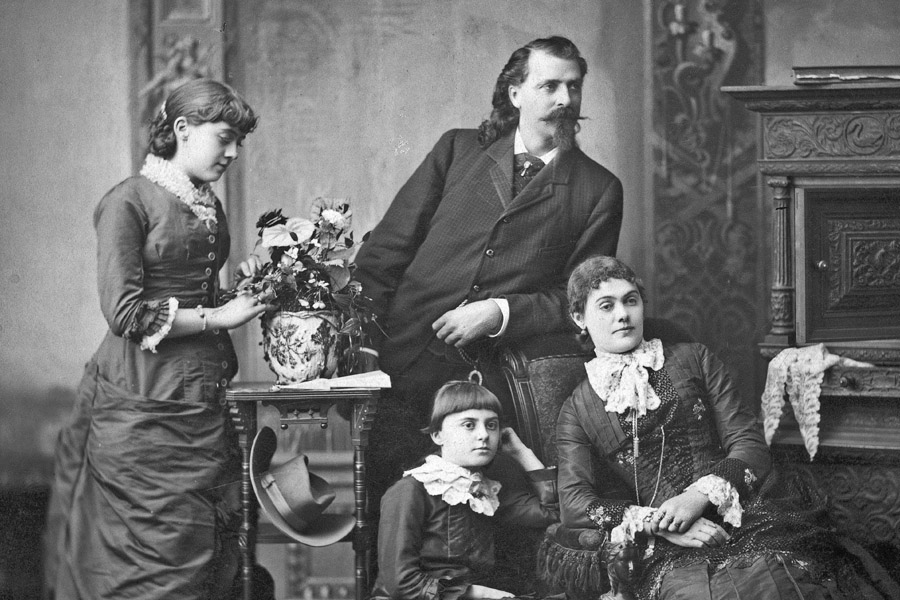
Louisa Maud, often called Lulu, met Cody while he was moving in and out of Civil War and frontier duties. Their courtship bridged the plainspoken world of St. Louis neighborhoods and the unsettled spaces of the Great Plains. The ceremony in 1866 marked the start of a union as durable as it was tested. What followed looked, at times, less like domestic routine and more like a campaign. She managed homes, accounts, and expectations while Cody took the Wild West to audiences in London, Paris, and New York.
The marriage endured separations, reconciliations, and a public glare that would wilt most couples. Across letters and later reminiscences, I see a pattern: he carried the limelight; she carried the ledger and the keys.
Children and the price of distance
The Codys welcomed four children, and the joy of each birth was shadowed by the risks of the era.
- Arta Lucille arrived in 1866, as the young family moved around Army and frontier posts. Arta married Horton Sinclair Boal and later married a physician named Dr. Charles Thorp. She died in 1904 after abdominal surgery, and her loss reverberated through the family at a fraught time.
- Kit Carson Cody was born in 1870 and died in 1876 from scarlet fever. Even now it is hard to write those dates. The boy’s name carried a legend; the child’s life was painfully short.
- Orra Maude was born in 1872 and died in 1883. Her death is remembered as a turning point that softened hard resolves within the family and pulled Buffalo Bill back from an early divorce attempt.
- Irma Louise, the youngest, was born in 1883. She married first Lt. Clarence Stott and later Frederick H. Garlow. With Garlow she had three children: Jane in 1909, Frederick Jr. in 1911, and William in 1913. Irma died in 1918, and Louisa stepped in again, this time as a grandmother with a house that needed to feel safe despite empty chairs.
From a distance, a famous marriage can look like a set piece. Up close, it is a kitchen table with photographs, a calendar, and a mother adding up what is left after each season of travel and illness.
Home fronts, deeds, and the quiet arithmetic of survival
I admire the way Louisa turned property into a kind of ballast. While Cody risked fortune and reputation on arenas, horses, railcars, and salaries, she bought and held land. In Nebraska and Wyoming, in the counties where their lives intersected forts and rail lines, she handled taxes and titles with a steady hand. It was strategic, even modern. Holding property in her own name buffered the family from the volatility that comes with spectacle. Where he paced before a curtain, she paced past a deed book and a woodstove.
There is a particular courage in financial housekeeping. It is not theatrical, but it is deeply public. Every tax receipt marks a moment of responsibility. Louisa became, in several seasons, a significant taxpayer in her counties, a quiet presence in the civic record that outlasts the applause of a Saturday night show.
The trial of 1905 and the public theater of private pain
The 1904 and 1905 divorce proceedings cracked the private shell of the Cody marriage. The trial in Cheyenne played like a touring production that everyone in town had to see. Accusations flew. Allegations of cruelty were paired with lurid claims that newspapers devoured. The judge refused the divorce petition, reasoning that incompatibility was not a sufficient legal ground. In the aftermath, the couple found their way to an uneasy peace. They stayed married. The next storms would be the kind that time sends, not courts.
When I read about this episode, I hear the clash between a performance culture that thrives on sensational claims and two people who knew each other far better than any headline writer. Louisa emerged from the ordeal as she entered it: guarded in public, stubbornly present in the family’s daily logistics.
After Buffalo Bill: the pen and the hearth
Buffalo Bill died January 10, 1917. Louisa continued as usual. She retained the house, raised grandchildren, and wrote. Writing with journalist Courtney Ryley Cooper, she released Memories of Buffalo Bill in 1919. The carefully crafted book favors hearth light over stage lights to show public life from a domestic perspective. As one would anticipate from a mourning spouse who knew both compassion and conflict in her marriage, it moves toward defense and tribute.
Louisa died in October 1921 in Park County, Wyoming, and was buried beside her husband on Lookout Mountain near Denver. The resting place feels apt. From that height the plains run wide, and the story of their lives looks less like a single trail and more like a braided river.
Timeline at a glance
I find the story flows clearest as a spine of dates. Born May 27, likely 1844, near St. Louis. Married March 6, 1866. Arta born 1866. Kit Carson born 1870, died 1876. Orra Maude born 1872, died 1883. Irma Louise born 1883, later mother of three children. The family weathered the public divorce case in 1905, with the petition denied. Arta died in 1904 after surgery. Buffalo Bill died on January 10, 1917. Louisa published Memories of Buffalo Bill in 1919. Louisa died in October 1921 and was interred on Lookout Mountain.
Key relatives and relationships
At the center of Louisa’s family life stood her husband, William F. Cody, a showman who reshaped the global idea of the American West. Around them were four children whose lives trace the hazards of a century before antibiotics and seatbelts. Arta, the eldest, tried to build her own life as a wife and mother and did not live to old age. Kit and Orra died as children, leaving grief that never dulls for a parent. Irma grew to adulthood, married twice, and had three children who kept the Cody name alive in Wyoming lore. Louisa’s role, across decades, was connective tissue. She remained the person who could translate public storms into private routines.
FAQ
Who was Louisa Frederici and why does she matter?
Louisa Maud Frederici Cody was the wife of William F. Buffalo Bill Cody and a crucial manager of the Cody household and properties. While her husband built an international entertainment empire, she stabilized the family’s finances, raised their children, and later wrote a memoir that captures the domestic side of a very public life.
When and where was she born and when did she die?
She was born on May 27, likely in 1844, in the St. Louis and Arnold, Missouri area. She died in October 1921 in Park County, Wyoming, and is buried beside her husband on Lookout Mountain near Denver.
How many children did Louisa and Buffalo Bill have?
They had four children. Arta Lucille, born in 1866, died in 1904. Kit Carson Cody, born in 1870, died in 1876. Orra Maude, born in 1872, died in 1883. Irma Louise, born in 1883, reached adulthood, had three children, and died in 1918.
What was Louisa’s role in the family’s finances and property?
Louisa quietly became a major stabilizer of the Cody estate. She purchased and held properties in her own name, paid taxes, and handled the recurring arithmetic of a touring family’s expenses. Her approach buffered the household during years when Cody took on heavy debts and entrepreneurial risks.
What happened in the 1905 divorce case?
Buffalo Bill filed for divorce, leading to sensational testimony and headlines. The judge denied the petition, finding that the grounds were insufficient. The case laid bare the strains in the marriage, but the couple remained legally married until Cody’s death in 1917.
Did Louisa write about her life with Buffalo Bill?
Yes. In 1919 she published Memories of Buffalo Bill with the assistance of writer Courtney Ryley Cooper. It offers a partisan but invaluable look at family life behind the pageantry and serves as an early posthumous portrait of Cody from the person who knew him best at home.
Where does Irma, their youngest, fit into the broader story?
Irma Louise Cody, born in 1883, married first Lt. Clarence Stott and later Frederick H. Garlow. She had three children and died in 1918. Her name lives on most famously in the Irma Hotel in Cody, Wyoming, a reminder that even in a showman’s town, the family story runs through a mother and daughter who anchored a home.
How should we understand Louisa’s legacy today?
I think of Louisa as a steady rudder in restless seas. She is a figure of domestic leadership, financial pragmatism, and narrative control, shaping how we remember a celebrity marriage by tending both the ledger and the diary. Her life shows that fame is not a solo act. It is a household.