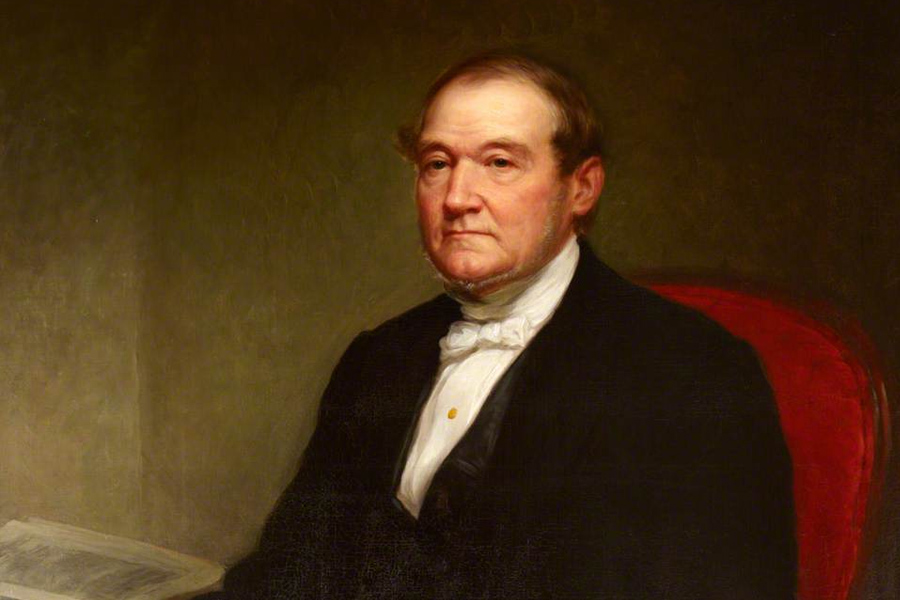
I have always been drawn to the men who shaped New York not with flash but with steady hands. William Backhouse Astor Sr. stands as one of those quiet titans. Born on September 19 1792 in New York City he inherited a budding empire and turned it into a colossus of real estate that still echoes through the city streets today. His life spanned from the early republic to the dawn of the Gilded Age. He died on November 24 1875 at age 83 leaving behind a fortune that had swelled from roughly 20 million dollars to nearly 50 million dollars. In my eyes he was less a speculator and more a patient steward whose methods remind me of water slowly carving stone into canyons.
The Making of a Fortune Builder
William Backhouse Astor Sr. helped his father John Jacob Astor’s store during school holidays. He attended New York public schools and briefly attended Columbia College before dropping out. At 16, his family sent him to Gottingen and Heidelberg for further study from 1808 to 1811. There, Christian Charles Josias von Bunsen tutored him. He joined John Jacob Astor and Son in 1815 after returning home. His older brother had health and mental concerns, so William inherited the firm.
His marriage was to New York aristocracy on May 20, 1818. The Astor name rose from merchant to elite after that union. His contemporaries called him stable and erudite. He rarely smiled but was attentive in every deal. He liked the family estate Rokeby near Barrytown, New York, which his wife renamed. He resided mostly in Manhattan. In the 1860s and 1870s, he possessed 720 homes and stores. Annual rents often exceeded $1 million. The Landlord of New York, he erected over 700 buildings and fought the Civil War income tax in court, pronouncing it unconstitutional.
Family Ties That Wove an American Web
The Astor family under William Backhouse Astor Sr. became a tapestry of power marriages and quiet influence. I find it remarkable how one man anchored so many branches. His parents were Johann Jakob Astor the German born founder of the fortune and Sarah Cox Todd. William himself became parent to seven children born between 1819 and 1832.
Here is a clear table of his direct children each one shaping the next generation in their own way:
| Child Name | Birth Year | Key Life Notes |
|---|---|---|
| Emily Astor | 1819 | Married Samuel Cutler Ward in 1838 had two children died young in 1841 during childbirth |
| John Jacob Astor III | 1822 | Married Charlotte Augusta Matilda Gibbes in 1846 had one son William Waldorf Astor became philanthropist |
| Mary Alida Astor | 1823 | Married John Carey in 1850 had three children inherited the Lafayette Place mansion |
| Laura Astor | 1824 | Married Franklin Hughes Delano uncle of President Franklin D Roosevelt in 1844 no children received Rokeby estate gifts |
| William Backhouse Astor Jr. | 1829 | Married Caroline Webster Schermerhorn the famed Mrs Astor in 1853 had five children including John Jacob Astor IV |
| Henry Astor | 1830 | Married Malvina Dinehart in 1871 no children known as the family black sheep lived quietly |
| Sarah Astor | 1832 | Died in infancy same year |
His grandchildren included John Jacob Astor IV the Titanic passenger born 1864 and William Waldorf Astor who later became the 1st Viscount Astor and moved to Britain. Through these lines the family connected to figures like Helen Roosevelt Robinson James Laurens Van Alen Orme Wilson Jr. Henry Coleman Drayton Carrie Astor and Carrie Astor Wilson in grandparent roles across generations. His wife Margaret Rebecca Armstrong born 1800 died 1872 after 54 years of marriage. Daughter of a U S senator she brought culture and refinement. She rarely left home except for charity work and helped make Rokeby a true family anchor.
William Backhouse Astor Sr. also stood as grandchild of Maria Magdalena Vorfelder on his fathers side. He served as parent to Johann Jakob Astor in the family tree sense and linked as great grandparent to later Roosevelt and Van Alen branches. These relationships created a web that stretched into politics business and society. I picture their dinners at the Lafayette Place townhouse as refined affairs where power flowed like wine yet never spilled into vulgar display.
Career Highlights Finance Wins and Lasting Achievements
William Backhouse Astor Sr. started in the export and China trade but real estate became his true arena. He followed his fathers plan buying Manhattan farmland and lots below Central Park between Fourth and Seventh Avenues. He held them developed them and watched values soar as the city exploded. In 1833 he inherited about 500000 dollars from his childless uncle Henry Astor. When his father died in 1848 he received the bulk of a 20 million dollar estate.
By 1867 he ranked as New Yorks wealthiest man with roughly 16 million dollars. He invested in railroads coal and insurance. His approach favored long term rental income over risky bets. That patience multiplied the fortune dramatically. He funded expansions to the Astor Library adding buildings land books and more than 550000 dollars in gifts. The library later helped form the New York Public Library. He also gave 50000 dollars to St Lukes Hospital and supported St Margarets Home.
In 1862 and 1863 the Lafayette Place mansion hosted family weddings even as Draft Riots raged nearby. He refused to abandon the home when the neighborhood turned commercial. His philanthropy blended private wealth with public good. He built structures that housed thousands and shaped neighborhoods that still stand.
An Extended Timeline of His Life
To grasp the sweep of William Backhouse Astor Sr.s journey I mapped it out with key dates and numbers:
- 1792 September 19: Born in New York City
- 1808 to 1811: Studies in Germany at Gottingen and Heidelberg
- 1815: Returns home joins family firm
- 1818 May 20: Marries Margaret Rebecca Armstrong
- 1819 to 1832: Seven children born
- 1833: Inherits 500000 dollars from uncle
- 1830s to 1840s: Builds Lafayette Place mansion
- 1848: Father dies inherits bulk estate now worth about 20 million dollars
- 1850s: Funds Astor Library expansions completed 1853 and 1859 donates to St Lukes
- 1860s: Owns 720 properties ranks as citys richest with 16 million dollars in 1867
- 1862 to 1863: Mansion hosts weddings amid city unrest
- 1872 February 15: Wife dies
- 1875 November 24: Dies in Lafayette Place home estate nearly 50 million dollars buried at Trinity Church Cemetery
These markers show a life of deliberate growth rather than sudden leaps.
Insights from Hidden Corners of History
Deeper research shows William Backhouse Astor Sr.’s hidden aspects. A marble-fronted Greek Revival mansion, Lafayette Place hosted his father’s 1848 funeral and his granddaughter Maddie’s 1862 wedding. Contemporary diarist Philip Hone commended the sophisticated, non-vulgar feasts. He persisted through the 1849 and 1863 Draft Riots in Astor Place.
The silent steward who used water on stone to build lasting houses on inherited property is less well known. His black sheep son Henry lived aloof, while daughter Laura received Rokeby shares as gifts that bonded the Delano family. We saw a man who blended ledger rigor with family loyalty, not a distant magnate. His caution saved the empire during New York’s hectic boom.
FAQ
What made William Backhouse Astor Sr. different from flashier Astors?
He focused on patient real estate holding rather than bold risks or social spectacle. His 720 properties and steady rents built lasting wealth while others chased quick gains.
How large was his family and who stood out?
He and Margaret Rebecca Armstrong raised seven children. Standouts include John Jacob Astor III the philanthropist and William Backhouse Astor Jr. whose wife became the legendary Mrs Astor guiding Gilded Age society.
What was his biggest financial achievement?
He grew the inherited 20 million dollar estate to nearly 50 million dollars by 1875 through Manhattan development. Annual rents hit over one million dollars and he owned 720 structures at peak.
Did he engage in philanthropy and how?
Yes he gave more than 550000 dollars to the Astor Library plus 50000 dollars to St Lukes Hospital. His gifts helped evolve the library into part of the New York Public Library system.
Why does his story still matter today?
Even now as I scan social media mentions and 2025 anniversary reflections his Landlord of New York title and family web remind us how one mans quiet decisions shaped neighborhoods fortunes and bloodlines that endure.