Basic Information
| Detail | Information |
|---|---|
| Full name | Helen Maria Hurd |
| Birth name | Helen Maria Barnum |
| Later name | Helen Maria Buchtel |
| Born | April 18, 1840 |
| Died | December 11, 1915 |
| Father | P. T. Barnum |
| Mother | Charity Hallett Barnum |
| First husband | Samuel Henry Hurd |
| Second husband | Dr. William Harmon Buchtel |
| Children | Three daughters with Samuel Hurd; at least one surviving daughter with William Buchtel |
| Residence | Connecticut, New York, Indiana, and Colorado |
| Denver home | 635 Emerson Street |
| Burial | Fairmount Cemetery, Denver, Colorado |
| Best known for | Her connection to the Barnum family, two marriages, Denver land holdings, and civic and charitable work |
Growing Up as a Barnum Daughter
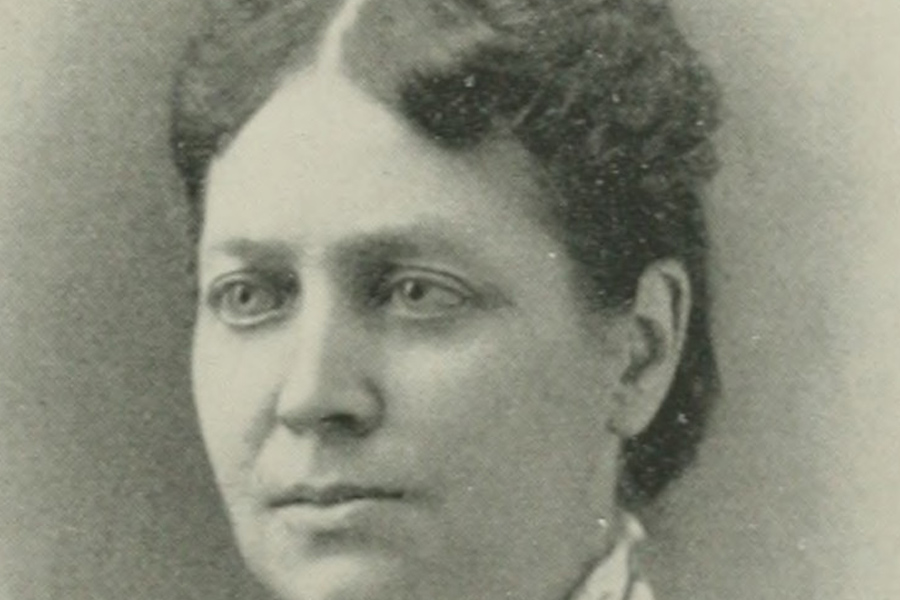
When I picture Helen Maria Hurd growing up, I imagine a household where ordinary family life was almost impossible to separate from spectacle. Her father, Phineas Taylor Barnum, was building the extraordinary public persona that would eventually make his name synonymous with American showmanship. Behind the posters, crowds, museums, curiosities, and later circus fame was a family with four daughters, and Helen was the second.
Helen was born on April 18, 1840, to P. T. Barnum and Charity Hallett Barnum. Some accounts differ over the precise place of her birth, but her Connecticut family roots are consistent. Her childhood unfolded during the years when her father’s career was gathering momentum, giving her access to education, wealth, social connections, and experiences that were far removed from the lives of most nineteenth century American girls.
Her sisters were Caroline Cornelia Barnum Thompson, Frances Irena Barnum, and Pauline Taylor Barnum Seeley. Frances died as a young child in 1844, making the family circle smaller before the surviving sisters reached adulthood.
Helen’s privileged upbringing also placed her in prominent social settings. One memorable detail associated with her youth is her attendance at President Ulysses S. Grant’s first inaugural ball. She was a young woman moving comfortably through the upper levels of American society, with her father’s name opening doors almost everywhere.
Yet Helen’s life would eventually become much less polished than the ballroom image suggests.
Marriage to Samuel Henry Hurd
On October 20, 1857, Helen married Samuel Henry Hurd at the home of her sister Caroline. She was only 17 years old. Hurd was involved in the leather business and later became closely connected with the Barnum enterprises.
The couple had three daughters: Helen Barnum Hurd, Julia Caroline Hurd, and Caroline Thompson Hurd. Their births came between 1858 and 1862, creating a young household while Helen herself was still barely into adulthood.
Samuel’s professional life became intertwined with P. T. Barnum’s increasingly complicated entertainment empire. He held various managerial and financial positions and was associated with Barnum’s American Museum and later show enterprises. For a period, the Hurd family therefore sat close to the machinery of the Barnum business world.
But the marriage eventually fractured.
Around 1871, Helen and Samuel divorced. The breakup was socially explosive, particularly because Helen soon remarried. Custody of the three daughters went to Samuel Hurd, an arrangement that must have been painful for Helen and would remain one of the most consequential details of her family story.
The Controversial Marriage to William Buchtel
Helen’s second marriage took place in March 1871 in South Bend, Indiana. Her new husband was Dr. William Harmon Buchtel, a physician associated with the treatment of tuberculosis patients.
The marriage caused considerable shock among family and social circles. Helen’s divorce from Samuel was already controversial, and her rapid remarriage intensified the reaction. Her relationship with her father became strained, although the rupture was not permanent. P. T. Barnum continued to maintain a personal relationship with Helen and provided financial assistance connected with her Colorado interests.
William Buchtel was an ambitious man with interests that extended beyond medicine. He became involved in Colorado real estate, mining, health facilities, and community development. His brother, Henry A. Buchtel, would become a major Colorado figure, serving as chancellor of the University of Denver and later as governor of the state.
For Helen, the marriage represented something larger than a change of husband. It marked the beginning of a western chapter that would occupy the rest of her life.
From Connecticut Society to Colorado
Helen and William headed west, first stopping in Greeley before settling in Denver. William’s medical interests included the assumption that Colorado’s environment may help TB patients.
The terrain also gave chance.
P. T. Barnum bought a lot of Denver land in the 1870s. An investment property became part of the Barnum neighbourhood.
The land tale is one of Helen’s most intriguing. Barnum bought hundreds of acres, which became part of the P. T. Barnum Subdivision. Helen acquired significant stakes in the 1880s for $1.
William developed the land, which became Barnum. In 1887, William was mayor and it was incorporated. Denver took over the town.
This section of Helen’s narrative is extremely interesting since her link to Denver was more than symbolic. Family name was etched on city map. A daughter of America’s greatest showman was affiliated with a Denver neighbourhood.
Life in Denver
Helen lived in Denver for approximately 44 years. Unlike her father, she did not build a national career around entertainment, politics, or business. Her influence was quieter and more local.
She developed a reputation for force of character and unusual executive ability. Her social position, financial resources, and family connections gave her opportunities to participate in civic life, but she also appears to have taken those responsibilities seriously.
Helen was associated with charitable organizations and served as president of a Charity Association. She was involved with St. John’s parish and worked with the Denver Orphans’ Home, including efforts connected with its endowment. She was also associated with the Daughters of the American Revolution or a similarly named hereditary organization in contemporary references.
This was the sort of nineteenth century civic work that rarely produces dramatic headlines but can leave a deep local footprint. Helen’s life in Denver was less about celebrity and more about institutions, neighborhoods, family property, and community responsibility.
Helen’s Daughters and the Family Tree
Helen’s three daughters from her first marriage followed different paths.
Helen Barnum Hurd Rennell, born in 1858, later married Francis William Thornton Rennell in 1883. She lived in the New York and Connecticut region and became involved in charitable activities, including work connected with institutions serving orphans, widows, and elderly people.
Julia Caroline Hurd Clarke, born in 1860, married Henry Peck Clarke in 1886. She eventually moved to South Carolina, where the family lived at Goodwill Plantation. Her daughter Nancy Barnum Clarke Carrier would later become associated with the founding of Rockbrook Camp in North Carolina, extending Helen’s family story into another generation.
Caroline Thompson Hurd, born in 1862, died in 1883 at a young age. Her early death was another sorrow in a family already marked by separation and complicated relationships.
Helen also had a daughter associated with her second marriage to William Buchtel. This surviving daughter was identified later in life as Mrs. Fred Chamberlain. References also indicate that another Buchtel daughter, Pauline, died young.
By the time Helen died, her surviving descendants represented several branches of a sprawling Barnum family tree.
P. T. Barnum and His Daughter
P. T. Barnum died in 1891, but his relationship with Helen remained one of the more complicated family threads in her life.
He was a father who had built an empire around publicity, yet Helen’s own most difficult moments were intensely personal. Her divorce and remarriage generated family tension that could not simply be managed like a publicity campaign.
Still, Barnum continued to provide support and eventually left Helen valuable Denver property interests. The inheritance helped secure the financial foundation of her later life.
Charity Hallett Barnum, Helen’s mother, had died in 1873. P. T. Barnum later married Nancy Fish, but his first family remained an important part of his personal legacy.
The Final Years
William Harmon Buchtel died in 1912. Helen survived him by three years, continuing to live in Denver.
Her final days came in December 1915. She lived at 635 Emerson Street when her health suddenly declined. She died on December 11, 1915, from grippe complicated by heart disease.
She was buried at Fairmount Cemetery in Denver.
At the time of her death, Helen was remembered not merely as P. T. Barnum’s daughter but as a longtime Denver resident, philanthropist, landholder, and woman of strong personality. Her surviving family included her daughter Mrs. Fred Chamberlain and granddaughter Mrs. Henry Carrier.
A Family Story Behind the Barnum Name
Her biography reads like a calmer complement to her father’s remarkable career. P. T. Barnum created huge personalities and impossible attractions, while Helen went thru emotional turmoil, marriage, motherhood, inheritance, relocation, and civic service.
Her narrative also illustrates how a renowned family may shape a city’s identity. Denver was officially named Barnum after Barnum’s property purchases and Helen’s bequest.
Without a circus ring, her life was full of drama: a teenage marriage, three kids, divorce, a contentious second marriage, a journey west, tuberculosis-era Colorado, real estate development, philanthropic service, and a renowned father’s conflicted love.
Helen Maria Hurd is noteworthy for that combination.
FAQ
Who was Helen Maria Hurd?
Helen Maria Hurd, born Helen Maria Barnum, was the second daughter of P. T. Barnum and Charity Hallett Barnum. She became associated with Denver through her second marriage, inherited Barnum property, and charitable and civic activities.
When was Helen Maria Hurd born?
Helen Maria Hurd was born on April 18, 1840. Accounts vary somewhat regarding her exact birthplace, although her Connecticut family background is consistently documented.
Who was Helen Maria Hurd’s father?
Her father was Phineas Taylor Barnum, better known as P. T. Barnum, the famous American showman, entrepreneur, museum proprietor, circus promoter, politician, author, and philanthropist.
Who was Helen Maria Hurd’s first husband?
Helen married Samuel Henry Hurd on October 20, 1857. They had three daughters before divorcing around 1871.
Who was Helen Maria Hurd’s second husband?
Her second husband was Dr. William Harmon Buchtel, a physician who became involved in Colorado medicine, real estate, mining, and community development.
How many children did Helen Maria Hurd have?
Helen had three daughters with Samuel Hurd: Helen, Julia, and Caroline. She also had a daughter with William Buchtel who survived into adulthood, while another Buchtel child reportedly died young.
What connection did Helen Hurd have to Denver’s Barnum neighborhood?
Helen inherited substantial Denver-area land connected to her father’s investments. Her second husband helped develop the property, which became associated with the Town of Barnum and eventually the Barnum neighborhood of Denver.
When did Helen Maria Hurd die?
Helen died on December 11, 1915, at her Denver home on Emerson Street. She was buried at Fairmount Cemetery in Denver.
Was Helen Maria Hurd involved in charity?
Yes. She participated in Denver charitable and civic organizations, including work connected with the Denver Orphans’ Home, St. John’s parish, and a Charity Association.
Did Helen Hurd remain close to P. T. Barnum?
Their relationship became strained after her divorce and second marriage, but the connection endured. Barnum continued to provide financial support related to her Colorado interests and left her valuable Denver-area property interests in his estate.