Basic Information
Ron Leibman was the kind of actor who could make a room feel smaller simply by walking into it. Born Ronald Leibman on October 11, 1937, in Manhattan, New York City, he built a career around intensity, wit, theatrical precision, and characters who rarely entered a scene quietly. To many viewers, he became familiar as Dr. Leonard Green on Friends or as the voice of Ron Cadillac on Archer. To theater lovers, however, he was something even bigger: a formidable New York stage actor whose career stretched across more than four decades.
| Basic Information | Details |
|---|---|
| Full name | Ronald Leibman |
| Born | October 11, 1937 |
| Birthplace | Manhattan, New York City |
| Died | December 6, 2019 |
| Age at death | 82 |
| Profession | Actor, writer, acting teacher |
| Education | Ohio Wesleyan University, American Academy of Dramatic Arts, Actors Studio |
| Broadway debut | Dear Me, the Sky Is Falling, 1963 |
| Tony Award | Best Actor in a Play, 1993 |
| Emmy Award | Outstanding Lead Actor in a Drama Series, 1979 |
| Best known for | Angels in America, Kaz, Friends, Norma Rae, Archer |
| Second wife | Jessica Walter |
| First wife | Linda Lavin |
| Biological children | None |
| Stepdaughter | Brooke Bowman |
| Death place | Manhattan, New York City |
Ron Leibman Archer and the Character That Brought Him to a New Generation
For many modern viewers, the quickest route to Ron Leibman is Archer. His voice became the comic engine behind Ron Cadillac, the swaggering husband of Malory Archer, voiced by his real life wife Jessica Walter.
There was something deliciously meta about it. Leibman and Walter had already spent decades together as actors, and suddenly their professional chemistry became part of an animated spy comedy. Leibman voiced Ron Cadillac in nine episodes between 2013 and 2016, while Walter continued as the unforgettable Malory Archer.
Ron Cadillac was exaggerated, vain, smooth talking, and ridiculous in exactly the way Archer demanded. Yet beneath the cartoonish surface was Leibman’s highly recognizable vocal presence. That nasal, slightly drawling delivery could turn an ordinary line into something theatrical.
I think that is part of what makes the casting so memorable. Leibman did not simply lend his voice to Archer. He brought the accumulated energy of a stage actor to an animated character.
His Archer connection also became especially poignant after his death. The series later paid tribute to him with an “In Loving Memory of Ron Leibman” card, reminding longtime viewers that behind the animated Ron Cadillac was a performer whose career had begun on Broadway decades before the world of Sterling Archer, espionage, and absurd corporate warfare existed.
A Manhattan Childhood and a Family of Immigrants
Leibman was born into a Russian Jewish family in Manhattan. His mother was Grace Leibman, née Marks, and his father was Murray Leibman, a Russian Jewish immigrant who worked in the garment business.
His childhood was not entirely easy. Around the age of six, Leibman was hospitalized with polio and spent months dealing with the illness. His parents later divorced, adding another difficult chapter to his early life.
Growing up in Manhattan gave him an unusually rich cultural landscape. The city was already a giant stage, filled with theaters, street life, arguments, accents, ambition, and characters. Leibman eventually turned that environment into artistic fuel.
He attended Ohio Wesleyan University in the 1950s, where acting began to take hold of him seriously. He later studied at the American Academy of Dramatic Arts and trained at the Actors Studio in New York.
Before fame arrived, he worked ordinary jobs to support himself. He sold shoes and drove a cab. He also performed with the Compass Players, the influential improvisational troupe associated with a remarkable generation of American performers.
That early experience mattered. Leibman’s acting was never polished into blandness. There was always a sense that something volatile was waiting underneath the surface.
The Stage Was Ron Leibman’s Real Home
Although television eventually introduced him to millions of households, theater remained the center of Leibman’s artistic identity.
He made his Broadway debut in 1963 in Dear Me, the Sky Is Falling. Other early productions included Bicycle Ride to Nevada and The Deputy. He also worked at Yale Repertory Theatre, where he appeared in demanding classical and modern productions.
His breakthrough arrived with Joseph Heller’s We Bombed in New Haven. Leibman originated Sergeant Henderson and received major theatrical recognition for his performance, including a Theatre World Award and a Drama Desk Award.
In 1970, his work in Transfers brought further recognition, including an Obie Award and Drama Desk recognition.
The stage gave Leibman something film and television could not always provide: room to build a character over an entire evening. He could stretch a pause, sharpen an insult, explode into anger, then suddenly reveal vulnerability.
His later Broadway work included I Ought to Be in Pictures, Doubles, and Neil Simon’s Rumors. In Rumors, he appeared opposite Jessica Walter, turning their real life partnership into part of their professional history as well.
Roy Cohn and the Tony Award That Defined His Career
If Ron Cadillac popularised Leibman, Roy Cohn made theatre history.
Leibman played Roy Cohn in Tony Kushner’s Angels in America, a fictionalised depiction of the notorious American lawyer and politician. She was ambitious, manipulative, afraid, haughty, and complex.
Leibman despised Cohn and was hesitant to play him. However, the performance benefited from that pain. He played Cohn’s inconsistencies instead of softening him.
Leibman won the 1993 Tony Award for Best Actor in a Play for Angels in America: Millenium Approaches. The Drama Desk Award went to him.
He completed his massive theatrical trip in Perestroika.
The role required a hilarious, scary actor. Leibman had that mix. Roy Cohn could command a room, but his dread and desperation were evident.
Leibman saw the Tony as more than a trophy. The dramatic craft he spent decades honing was recognised.
From the Stage to Film and Television
Leibman’s film career began with Where’s Poppa? in 1970. He soon appeared in films including The Hot Rock, Slaughterhouse-Five, The Super Cops, and Norma Rae.
In Norma Rae, he played union organizer Reuben Warshowsky opposite Sally Field. The role connected with his own background. Leibman had personal experience with garment workers and labor organization, giving the performance an additional layer of authenticity.
His later film credits included Zorro, the Gay Blade, Rhinestone, Auto Focus, Garden State, and A Little Help.
Television brought an entirely different kind of recognition.
In 1978, Leibman created, co-wrote, and starred in Kaz, playing Martin “Kaz” Kazinsky, an ex-convict who becomes a lawyer. The series explored rehabilitation and second chances, themes Leibman cared deeply about.
His performance won the Primetime Emmy Award for Outstanding Lead Actor in a Drama Series in 1979. The victory arrived at an awkward moment because Kaz was canceled shortly afterward.
Then came Friends.
Dr. Leonard Green and the Family Connection
Leibman played Dr. Leonard Green, Rachel Green’s demanding, intimidating father, on Friends. He appeared repeatedly between 1996 and 2004.
The character was perfectly suited to Leibman’s particular brand of controlled irritation. Dr. Green could enter a scene and instantly make everyone else nervous.
Interestingly, Leibman initially did not want the role. His stepdaughter Brooke Bowman encouraged him to take it, partly because she wanted him to meet the cast.
That decision added another fascinating thread to his family story. His stepdaughter was not simply a member of his household. She became an influential television executive herself.
Ron Leibman and Jessica Walter
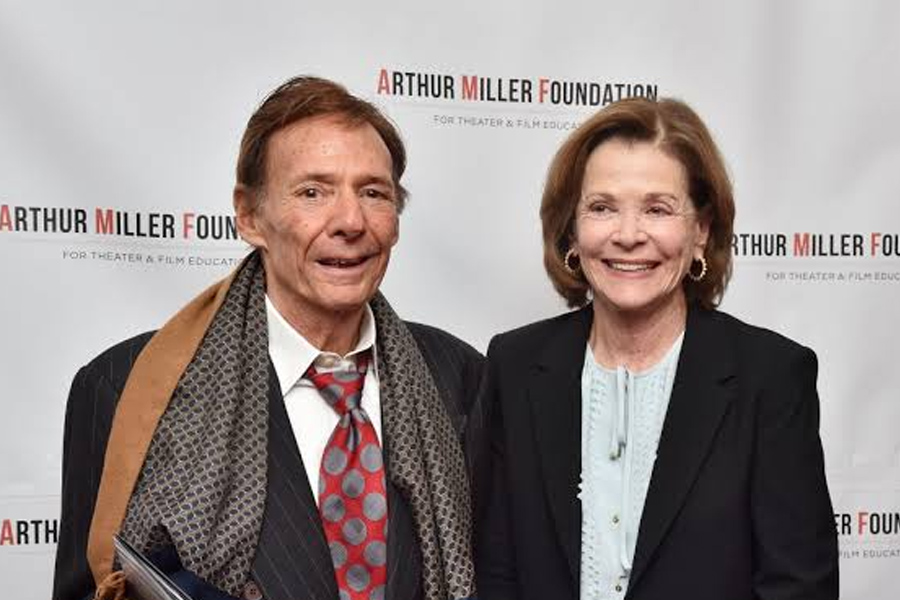
Leibman’s longest relationship was with Jessica Walter.
After meeting at Brenda Vaccaro’s party the year before, they married on June 26, 1983. Their first date was a Chinese restaurant with egg rolls, a seemingly mundane start to a romance that lasted until Leibman’s death.
Walter was a talented actor who played Play Misty for Me and then Malory Archer on Archer.
The duo collaborated professionally. They performed in Tartuffe, Rumours, Dummy, and on TV.
Archer fans liked their marriage since Leibman’s Ron Cadillac was married to Walter’s Malory Archer. Their real-life relationship made those sequences more charming.
Walter said they no longer competed. That type of teamwork was amazing after decades in an ego-driven industry.
In 2019, Leibman died. Walter lived two years longer and died in 2021.
Linda Lavin and the Earlier Marriage
Before Jessica Walter, Leibman was married to actress Linda Lavin.
The two met while working together on the Broadway play Cop-Out. They married on September 7, 1969, and remained together until their divorce in 1981.
There were no children from the marriage.
Lavin went on to become widely known for television and theater work, while Leibman continued building his own reputation as a stage and character actor.
Brooke Bowman and Leibman’s Role as a Stepfather
Leibman had no biological children, but he was a stepfather to Brooke Bowman, Jessica Walter’s daughter from her earlier marriage to Broadway stage manager and director Ross Bowman.
Born May 18, 1972, Brooke grew up with Leibman as an important adult presence in her life. Accounts of their relationship describe him as funny, generous, affectionate, and deeply involved.
Bowman later developed her own career in television programming and development, including work with Fox Broadcasting and ABC Family, now associated with Freeform.
She married David Heymann, and they have a son, Micah Walter Heymann, born July 7, 2013. That made Micah Leibman’s step-grandson.
So while Leibman never had biological children, his family life was not empty of the next generation. His relationship with Brooke became one of the quieter but more meaningful parts of his personal story.
Acting Teacher and Mentor
Later in life, Leibman became increasingly involved in teaching. From around 2005, he taught acting at The New School for Drama in New York City.
Teaching suited an actor who had accumulated so much practical knowledge. He had spent decades learning how to inhabit difficult characters, command a stage, work with directors, handle audiences, and survive the unpredictable rhythm of a professional acting career.
For students, he represented something valuable: a performer who had actually lived the profession rather than simply discussing it.
His career had moved through Broadway, Off-Broadway, regional theater, Hollywood films, network television, sitcoms, animation, and classrooms. Few actors could offer such a broad map.
Ron Leibman’s Final Years and Legacy
Leibman worked until old age. Final time includes Archer, when his partnership with Jessica Walter was unexpectedly immortalised thru animation.
Pneumonia killed him at 82 in Manhattan on December 6, 2019.
His professional legacy is extraordinarily complex. One generation remembers Roy Cohn. Another recalls Kaz. Television viewers recall Dr. Leonard Green. Filmgoers recall Norma Rae. The suave car salesman married to Malory Archer was Ron Cadillac.
That range communicates the narrative better than any role.
Ron Leibman was more than a famous actor. His theatre acting made him famous in numerous mediums. He brought his voice, timing, energy, and ability to make tough characters funny to New York theatres, television, and an animated universe where his real-life marriage became a comedy.
Ron Leibman Family at a Glance
| Family Member | Relationship to Ron Leibman | Key Details |
|---|---|---|
| Grace Leibman | Mother | Born Grace Marks; Russian Jewish background |
| Murray Leibman | Father | Russian Jewish immigrant; garment businessman |
| Linda Lavin | First wife | Married 1969, divorced 1981 |
| Jessica Walter | Second wife | Married 1983 until Leibman’s death in 2019 |
| Brooke Bowman | Stepdaughter | Born 1972; television executive |
| David Heymann | Stepdaughter’s husband | Married Brooke Bowman |
| Micah Walter Heymann | Step-grandson | Born July 7, 2013 |
| Richard Walter | Brother-in-law | Jessica Walter’s brother |
FAQ
Who was Ron Leibman on Archer?
Ron Leibman voiced Ron Cadillac, the husband of Malory Archer, in Archer. His wife Jessica Walter voiced Malory, making the animated couple an amusing reflection of their real life marriage.
What was Ron Leibman best known for?
He was best known for originating Roy Cohn in Angels in America, winning a Tony Award for the role, starring in Kaz, playing Dr. Leonard Green on Friends, and voicing Ron Cadillac on Archer.
Was Ron Leibman married to Jessica Walter?
Yes. Leibman and Jessica Walter married on June 26, 1983, and remained together until his death in December 2019.
Did Ron Leibman have children?
Leibman had no biological children. He was the stepfather of Brooke Bowman, Jessica Walter’s daughter from her previous marriage.
Who was Ron Leibman’s stepdaughter?
His stepdaughter was Brooke Bowman, born May 18, 1972. She became a television programming and development executive and later had a son named Micah Walter Heymann.
What award did Ron Leibman win for Angels in America?
Leibman won the 1993 Tony Award for Best Actor in a Play for originating the role of Roy Cohn in Angels in America: Millennium Approaches.
When did Ron Leibman die?
Ron Leibman died on December 6, 2019, in Manhattan at the age of 82 from complications of pneumonia.
What happened to Jessica Walter?
Jessica Walter survived Leibman by about two years and died in 2021. She remained best known to many later viewers as Malory Archer on Archer, the animated character whose husband was voiced by Leibman.
Did Ron Leibman work on Friends?
Yes. He played Dr. Leonard Green, Rachel Green’s father, in recurring appearances on Friends from 1996 through 2004.
Where did Ron Leibman begin his acting career?
Leibman developed his craft through theater, including study at Ohio Wesleyan University, the American Academy of Dramatic Arts, and the Actors Studio. He made his Broadway debut in 1963 and remained closely connected to New York theater throughout his life.